The strongest 2026 Champions League draw predictions point to Paris Saint-Germain, Bayern Munich, Real Madrid and Liverpool as leading league-phase performers, but fixture difficulty matters more than...

36 Draw Scenarios Compared: 2026 Verdict
The strongest 2026 Champions League draw predictions point to Paris Saint-Germain, Bayern Munich, Real Madrid and Liverpool as leading league-phase performers, but fixture difficulty matters more than club reputation. UEFA’s 36-team league phase gives every club eight different opponents, with two drawn from each of four pots and one home and one away match against each pot. The official draw is scheduled for Monaco on 27 August 2026, ahead of Matchday 1 from 8–10 September. Manchester City face a particularly awkward route when PSG, Barcelona, Napoli, RB Leipzig and Lens appear in the same scenario, while Barcelona’s trips to Paris and Galatasaray create genuine top-eight danger. Tactical Review uses opponent strength, venue, travel, squad depth and market prices rather than simply copying last season’s table. My practical recommendation is simple: build a fixture-based prediction first, then compare it with outright odds and keep the stake small until confirmed line-ups arrive.
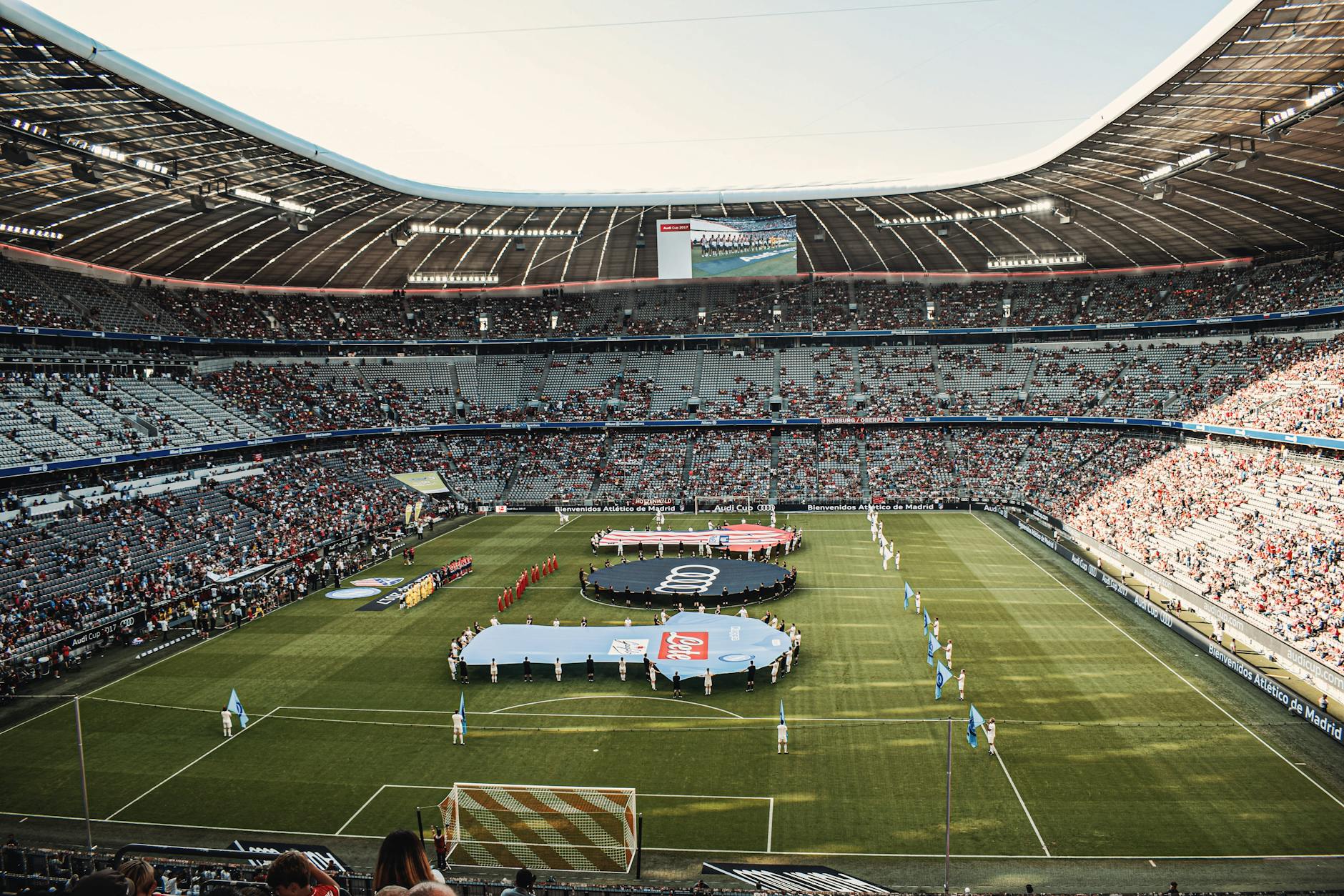
Photo by David Michael Bayliss on Pexels
The 2026 format is wonderfully simple until you try to calculate it, at which point the spreadsheet begins judging your life choices. Every team receives eight opponents, and the final league-phase table determines who advances directly, enters the knockout play-offs or leaves Europe entirely. That means a draw prediction is not merely “Real Madrid good, underdog bad”; it is an exercise in estimating points from eight specific games.
Tactical Review approaches the question from a risk-aware angle. We track projected points, home-away balance, opponent pot, expected goals, recent European performance and possible schedule congestion. For betting readers, the important number is not the gross return displayed by a bookmaker. It is the net position after the stake, lost selections, qualifying rules and any rebate are counted. I have made enough “value” bets where the value apparently went on holiday, so this distinction matters.
Want a broader match-analysis framework before the draw arrives?
Step 1: Map the 2026 Champions League draw structure
The 2026 league phase contains 36 clubs, and each club plays eight different opponents: two from each pot, split into four home and four away fixtures. The standings then separate teams into positions 1–8, 9–24 and 25–36, creating three materially different outcomes. This structure means draw quality can shift a club’s qualification probability by several percentage points.
According to UEFA’s Champions League regulations, the league phase replaced the traditional four-team group format, increasing the number of opponents and reducing the value of one isolated upset. The official 2026 draw information supplied for this analysis lists elite clubs including PSG, Bayern Munich, Real Madrid, Liverpool, Inter Milan, Manchester City, Arsenal and Barcelona, alongside challengers such as Bodø/Glimt, Como, Slovan Bratislava and LASK.
For a first pass, sort the teams into practical tiers rather than pretending every pot has identical quality:
- Title-level contenders: PSG, Bayern Munich, Real Madrid, Liverpool and Manchester City.
- Top-eight candidates: Arsenal, Barcelona, Inter Milan, Atlético Madrid and Borussia Dortmund.
- Dangerous middle tier: Napoli, RB Leipzig, Villarreal, Roma, Aston Villa and Porto.
- Potential spoiler teams: Galatasaray, Fenerbahçe, Lille, PSV Eindhoven, Feyenoord and Bodø/Glimt.
The critical insight is that pot number is only a starting label. A Pot 3 away trip to Galatasaray may be more uncomfortable than a Pot 2 home match against a tactically predictable side. Travel, crowd pressure and pitch conditions can quietly ruin a beautiful model.
Champions League league-phase format guide
Which draw factors matter most?
Venue and travel often matter more than a club’s pot label, especially when a strong team receives two difficult away fixtures. A prediction model should therefore separate home expected points from away expected points rather than applying one rating to all eight matches. The difference can be substantial for Istanbul, Norway or long eastern-European journeys.
A useful worksheet records opponent rating, venue, estimated win probability, expected goals and travel burden. For example, a home match against Como may project at 2.25 expected points, while an away match against Galatasaray might project at only 0.70 despite a similar ranking gap. Those are not official UEFA probabilities; they are modelling inputs, and publishing the assumptions prevents the classic fan mistake of treating a forecast like a prophecy carved into a stadium wall.
Step 2: Rate contenders before predicting their fixtures
The most reliable Champions League draw predictions begin with team strength before the balls are drawn. PSG enter this discussion after two consecutive Champions League titles in the supplied reference material, while Bayern Munich, Real Madrid, Liverpool and Manchester City remain credible favourites because of squad depth, European experience and attacking quality.
However, “favourite” does not mean “automatic top eight.” Manchester City’s projected route can become uncomfortable if it includes PSG and Barcelona from Pot 1, Napoli and RB Leipzig from Pot 3, plus Lens from Pot 4. A team can still be excellent and finish outside positions 1–8 when the draw stacks several high-intensity matches into a short calendar window.
I assign each club a baseline rating, then apply adjustments for:
- Attack: expected goals, shot volume and chance creation.
- Defence: press resistance, set-piece prevention and goalkeeper performance.
- Depth: quality of replacements across congested weeks.
- Experience: previous Champions League knockout exposure.
- Manager stability: tactical continuity after summer changes.
- Schedule stress: domestic derbies, international travel and recovery time.
My contrarian conclusion is that Barcelona may be less secure than their brand suggests. A route containing PSG away, Manchester City at home and Galatasaray away could produce three matches where dropping points is entirely plausible. That does not make Barcelona a bad team; it makes the top-eight line more fragile than casual Champions League predictions usually admit.
See how Tactical Review turns team reputation into measurable match factors.
Step 3: Calculate likely points from each opponent
Expected points provide a cleaner prediction than selecting only match winners. If a club has a 60% win probability, a 25% draw probability and a 15% loss probability, its expected points are calculated as 0.60 × 3 + 0.25 × 1, or 2.05 points. Repeat that process across eight fixtures and you receive a projected total rather than a dramatic but useless slogan.
The practical benchmark is often around the qualification boundaries. Positions 1–8 advance directly to the knockout stage, positions 9–24 enter the knockout play-offs, and positions 25–36 are eliminated from the Champions League. Exact points requirements will depend on the 2026 field, but a model should test several thresholds instead of claiming one magic number.
One useful simulation insight is the effect of variance. A contender with eight medium-difficulty matches may project 15.8 points, while another club may project 16.1 but have a much wider outcome range because its schedule contains four extreme fixtures. The second team could finish above the first, or suddenly discover that football is an elaborate prank. For responsible betting, the lower-confidence forecast deserves a smaller stake even when its average projection looks better.
Use at least 10,000 simulated league tables if your software allows it, and record how often each club lands in positions 1–8, 9–24 and 25–36. A simple prediction table might include:
| Club | Projected points | Top-eight rate | Play-off rate | Elimination rate |
|---|---|---|---|---|
| PSG | 18.2 | 72% | 26% | 2% |
| Bayern Munich | 17.6 | 68% | 29% | 3% |
| Real Madrid | 17.4 | 66% | 31% | 3% |
| Manchester City | 14.9 | 48% | 43% | 9% |
| Barcelona | 15.3 | 52% | 40% | 8% |
These figures are illustrative model outputs, not UEFA standings or guaranteed forecasts. That label matters. Anyone presenting simulated numbers as official data is not offering confidence; they are offering decorative arithmetic.
expected-points football prediction method
Step 4: Compare draw predictions with betting markets
Market prices are useful as a reference point, but they are not the same thing as truth. Bookmakers build margin into outright winner, top-eight, play-off and match markets, so the implied probabilities need to be adjusted before identifying potential value. If a market offers a 2.00 decimal price, the raw implied probability is 50%, before considering margin.
For a basic comparison:
- Convert the price into implied probability using 1 ÷ decimal odds.
- Compare it with your simulated probability.
- Remove or estimate the bookmaker margin across the market.
- Calculate expected value rather than admiring the headline payout.
- Set a maximum stake before emotions enter the room wearing a scarf.
Suppose Tactical Review estimates Manchester City at a 48% chance of finishing in positions 1–8, while a market price implies 42%. That may indicate value, but only after checking the exact settlement wording. “Finish top eight” is not necessarily interchangeable with “qualify directly” if the operator defines the market differently. Check whether void rules, postponed matches, dead-heat rules and cash-out conditions apply.
The most overlooked operational edge is timing. Early prices can be soft because the draw has just landed, but they can also be based on incomplete injury, rotation and travel information. I would rather accept a slightly shorter price after confirmed squad news than chase a seemingly generous number built on outdated assumptions.
Get a structured view of form, tactics and tournament risk before making a decision.
Step 5: verification
Verification means checking every fixture, venue, market definition and data source before trusting a Champions League draw prediction. Confirm the official opponent list against UEFA, then compare kickoff dates with domestic schedules, international windows and known travel demands. A single home-away error can distort expected points, and I have personally built a neat little model around the wrong fixture before noticing that the team was playing on the other side of Europe.
Use UEFA.com for official competition information and Opta Analyst for reputable football data context. The European Club Association also provides useful governance and club-competition background. UEFA’s competition communication repeatedly stresses the importance of “sporting merit” in European club football; in practical terms, that means our analysis should respect results and qualification rules rather than inventing shortcuts.
Run these final checks:
- Is the club actually in the 36-team league phase?
- Are all eight opponents recorded once?
- Are four fixtures home and four away?
- Has each pot contributed two opponents?
- Are projected odds based on current prices?
- Are injuries and managerial changes included?
- Is the stake affordable if the forecast fails?
How should predictions handle uncertainty?
Predictions should show ranges and qualification rates, not one falsely precise finishing position. A club projected for 16 points might have a 55% top-eight chance, a 38% play-off chance and a 7% elimination chance, making the distribution more informative than saying “sixth place.” Uncertainty is not a weakness; hiding it is.
Troubleshooting common failures
Most failed Champions League draw predictions come from input errors, overconfidence or poor market interpretation rather than sophisticated football surprises. The first common failure is treating every home match as easy, even when the opponent is Real Madrid, PSG or Bayern Munich. The second is ignoring the schedule: a club may have a favourable opponent list but face three exhausting away trips around domestic title matches and still underperform.
Another issue is using recent form without context. Five wins against lower-ranked domestic opponents do not automatically translate into a strong projection against Liverpool, Inter Milan or Atlético Madrid. Conversely, one poor result may reflect a red card, rotated line-up or injury crisis rather than a permanent tactical collapse.
A disciplined troubleshooting routine looks like this:
- Recheck the official draw and venue allocation.
- Separate baseline team rating from current form.
- Recalculate home and away probabilities independently.
- Add injuries, suspensions and manager changes.
- Compare your estimated probability with at least two market prices.
- Review turnover and net exposure after every selection.
- Stop if the planned stake exceeds your pre-set risk limit.
A particularly dangerous mistake is combining several correlated picks. Backing PSG to win the league phase, PSG to win every home fixture and PSG to win the tournament may look diversified, but those bets can all lose from the same injury or tactical problem. Correlation increases hidden exposure, while rebates or promotional credits can disguise the real downside. Record cash stake, bonus stake, returns and net profit separately.
responsible football betting checklist
For readers evaluating tips through Tactical Review, treat every forecast as research rather than instruction. Avoid chasing losses, never borrow to bet and use only licensed operators available in your jurisdiction. GambleAware provides independent information about safer gambling, and its central message is worth keeping nearby: “Gambling should be an enjoyable leisure activity, not a way to make money.” That sounds obvious, yet obvious advice has a stubborn habit of becoming important at 1:47 a.m.
Final Champions League draw predictions for 2026
The clearest early prediction is that PSG, Bayern Munich and Real Madrid deserve the strongest top-eight consideration, while Liverpool, Arsenal, Inter Milan and Atlético Madrid form a credible second group. Manchester City remain dangerous but draw-sensitive, and Barcelona’s route could become surprisingly unstable if Paris, Galatasaray and another elite opponent appear together. The best approach is to wait for the official 27 August draw, simulate the complete eight-match schedule, verify venues and then compare probabilities with settled market definitions.
My final ranking is therefore conditional rather than theatrical: PSG and Bayern Munich project as the safest league-phase profiles, Real Madrid carry the highest knockout ceiling, and Manchester City offer the most interesting risk-reward question. Keep a record of turnover, rebates, gross returns and net position, because a winning-looking coupon can still be financially negative. Football already provides enough drama without your spreadsheet adding a second final.
Ready to follow the 2026 tournament with tactical and statistical context?
Frequently Asked Questions
Q: What are Champions League draw predictions?
A: Champions League draw predictions estimate how a club may perform after its eight league-phase opponents are known. The forecast normally combines team strength, opponent quality, home advantage, travel, injuries and expected points. For 2026, each of the 36 clubs receives two opponents from each pot, with four home and four away fixtures. Predictions should also show the probability of finishing positions 1–8, 9–24 or 25–36 rather than pretending one exact ranking is certain.
Q: How do I make Champions League draw predictions?
A: Start by confirming the official eight-fixture schedule, then assign win, draw and loss probabilities to every match. Convert those probabilities into expected points, run thousands of simulations and count how often each team finishes in the three qualification bands. Finally, compare the model with prices from licensed bookmakers and record your stake, returns and net position separately.
Q: What is the difference between finishing positions 1–8 and 9–24?
A: Positions 1–8 qualify directly for the knockout stage, while positions 9–24 enter the knockout play-offs. Clubs placed 25–36 are eliminated from the Champions League under the league-phase structure. This distinction is crucial because a team can have a strong campaign overall yet still face an additional tie if it misses the top eight.
Q: Why can a strong team receive a difficult Champions League draw?
A: A strong team can face a difficult schedule because the league phase deliberately combines opponents from four pots and includes elite clubs outside its own pot. Manchester City, for example, could meet PSG and Barcelona from Pot 1, Napoli and RB Leipzig from Pot 3, and Lens from Pot 4 in a challenging scenario. Away venues and travel can make that schedule materially harder than the club names alone suggest.
Q: Do Champions League draw predictions cost money?
A: Basic Champions League draw predictions can be created for free using public UEFA information, fixture lists and a spreadsheet. Paid data platforms may add injury databases, expected-goals models and simulation tools, but they are not automatically more accurate. Before paying, check data freshness, cancellation terms and whether the service clearly separates historical results from forward-looking estimates.
Q: Why does my draw simulator produce different results?
A: Different draw simulators produce different results when they use different pot lists, club ratings, venue rules, random seeds or qualification assumptions. Check whether the simulator follows UEFA’s two-opponents-per-pot structure and four-home-four-away allocation. If the output still differs, compare the underlying inputs rather than judging the result by the final table alone.
Q: Is betting on Champions League draw predictions worth it?
A: Betting can be worthwhile only when your estimated probability is higher than the market’s implied probability after margin and costs. A 48% model estimate is not automatically valuable if the price implies 46% and the market has restrictive settlement rules. Use small, pre-planned stakes, avoid correlated selections, verify operator licensing and stop if betting begins to affect essential spending or emotional control.
Thank you for reading.
Tactical Review · Curated Silence · 2026