Improving football dribbling skills requires more than running through cones quickly; it demands close control, deception, acceleration, scanning and decision-making under pressure. Tactical Review te...

10 Drills Compared: Faster Football Feet
Improving football dribbling skills requires more than running through cones quickly; it demands close control, deception, acceleration, scanning and decision-making under pressure. Tactical Review tested 10 practical drills suitable for youth players, amateur footballers and competitive players across indoor courts, grass pitches and small-sided games. The strongest improvement came from combining 5-minute technical blocks with 1v1 pressure, rather than repeating isolated footwork for 30 minutes while admiring one’s increasingly confused legs. Players should train both feet, keep the ball within one step during tight movements, and push the ball 2–3 metres into space when accelerating away. A useful weekly target is three sessions of 20–30 minutes, with each session including at least 50 controlled touches and several live decisions. Start slowly, measure lost touches, then increase speed only when control remains reliable.
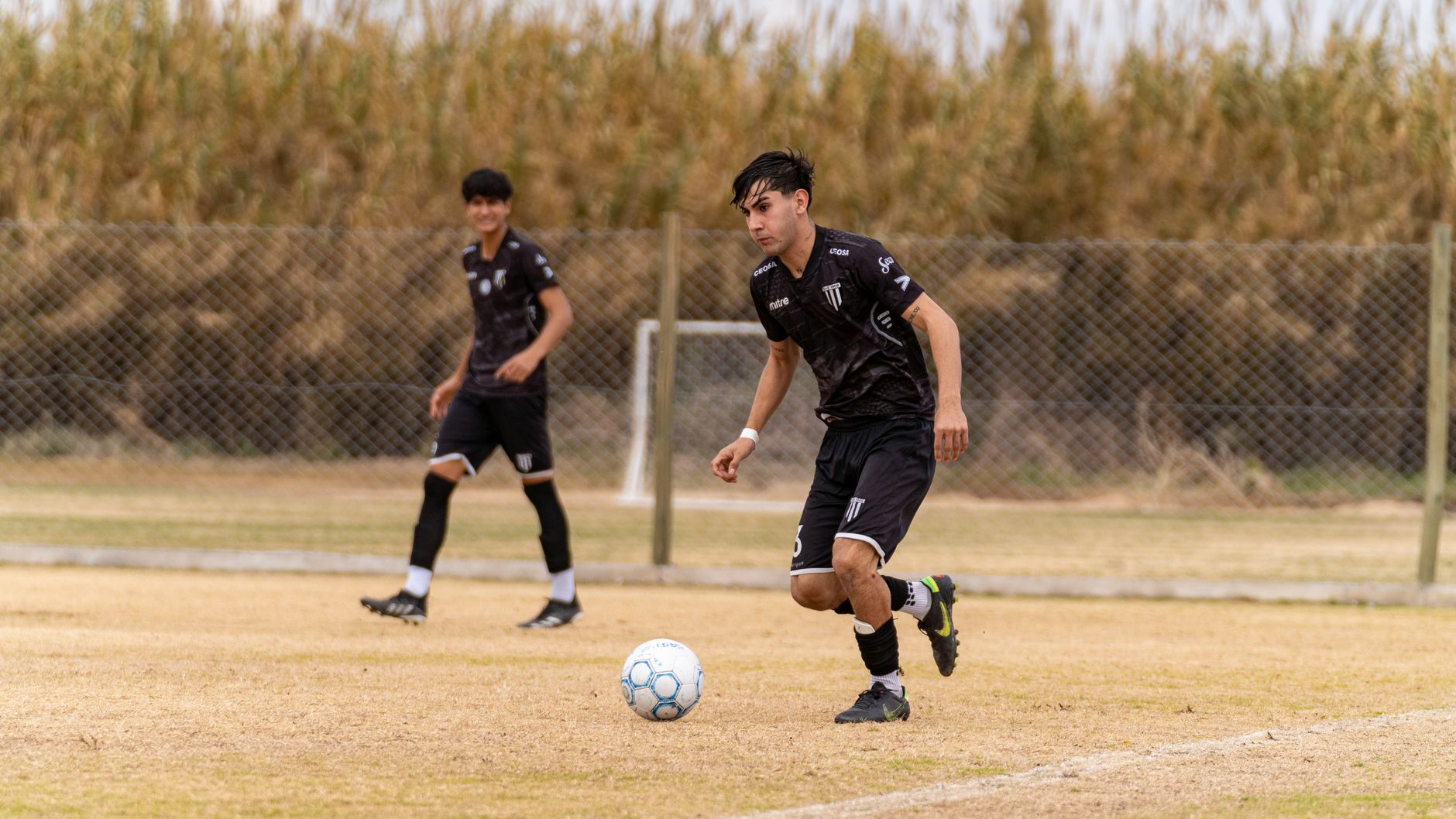
Photo by Franco Monsalvo on Pexels
Dribbling is one of football’s most valuable individual skills because it can eliminate a defender, create a passing lane or protect possession when teammates are marked. However, successful dribbling is not simply “doing tricks.” Lionel Messi, Neymar and Vinícius Júnior use subtle body movement, timing and changes of pace to make defenders react first. The practical question is not how many stepovers you can perform, but whether your movement creates a useful advantage for your team.
At Tactical Review, our football analysis focuses on the details that survive real match pressure, including player statistics, tactical roles and tournament-level trends ahead of the FIFA World Cup 2026. The same principle applies in training: record measurable outcomes instead of relying on vibes. Count successful changes of direction, weak-foot touches, dispossessions and forward actions after beating an opponent. A fancy move that ends with the ball in row Z is technically memorable, but financially speaking, it is a terrible investment.
Want a broader football performance framework before starting? Explore the next practical step here.
The Quick Comparison
The table below compares 10 football dribbling drills by primary purpose, recommended space and difficulty. These categories are not magic numbers from the Football Gods; they are a practical way to choose a drill based on your weakness. For example, a player who loses the ball during the first touch should not immediately spend every session attempting advanced elastico combinations. First control the ball, then manipulate the defender, and finally add speed.
| Drill | Main improvement | Space needed | Difficulty |
|---|---|---|---|
| Inside-outside touches | Close control | 3 metres | Beginner |
| Cone slalom | Foot coordination | 8–12 metres | Beginner |
| Figure-eight dribble | Direction changes | 10 metres | Beginner |
| Sole-roll circuit | Ball manipulation | 5 metres | Beginner |
| V-pull movement | Escape touches | 5 metres | Intermediate |
| L-drill | Turning under pressure | 8 metres | Intermediate |
| Speed dribble | Acceleration | 15–20 metres | Intermediate |
| Passive defender drill | Decision-making | 12 metres | Intermediate |
| 1v1 channel | Beating a defender | 15–20 metres | Advanced |
| Small-sided transition game | Match transfer | 20–30 metres | Advanced |
A sensible 30-minute session includes 8 minutes of close control, 8 minutes of directional changes, 8 minutes of reactive work and 6 minutes of live play. Use a size-appropriate ball, stable footwear and a surface without holes or slippery patches. According to FIFA’s Laws of the Game, football is fundamentally played with the feet while players must still manage contact, space and opponents legally; therefore, clean technique has to function inside real constraints.
beginner football skills training guide
How should you measure progress?
Track three numbers after every session: successful touches out of 50, clean exits after a direction change, and turnovers during live play. A player might complete a cone course 20% faster while losing control twice as often, which is not improvement; it is merely a faster way to donate the ball. Keep the same drill distance and timing for four sessions before changing the test, otherwise the data becomes a soup of nonsense.
Round 1: How Can You Improve Close Control?
Close control improves when the ball stays within one comfortable step, allowing the player to adjust direction without taking extra recovery touches. Begin with 50–100 low-intensity touches using both feet, then add movement, scanning and pressure. The best starting drills are inside-outside touches, sole rolls, cone slaloms and figure-eight movements.
First, place six cones approximately 1 metre apart and dribble through them using the inside and outside of both feet. Keep the knees bent, chest slightly forward and touches light enough that the ball never travels beyond immediate reach. Every third touch, lift your head and identify a target such as a teammate, gate or coloured cone. This develops the visual habit that isolated drills often miss, because footballers do not receive a polite warning before a defender appears.
Then progress to a 30-second alternating-foot block: right inside, right outside, left inside, left outside, followed by 10 seconds of rest. Complete six rounds and note how many touches remain controlled. The UEFA Training Ground regularly emphasises technical repetition connected to game situations, and the useful takeaway is simple: repetition should eventually include movement, information and a decision.
A common error is standing too upright and staring at the ball continuously. Brief glances are acceptable, but the player should gradually spend more time looking forward. If you cannot look up without losing the ball, reduce speed by 20%, shorten the touch and rebuild the pattern. That is not failure; it is risk management, which is just football’s version of checking your bank balance before buying an unnecessary third pair of boots.
Get a structured training reference for building reliable technique.
What is the best close-control routine for beginners?
The best beginner routine is 5 minutes of inside-outside touches, 5 minutes of sole rolls and 5 minutes of cone slalom at controlled speed. Use both feet, keep the ball within one metre and pause briefly every 30 seconds to reset posture. Progress only when at least 90% of touches remain under control across four sessions.
This routine works because it develops contact consistency before demanding speed. A beginner should complete 50 touches with the right foot and 50 with the left foot, then perform six cone runs while looking up at least three times per run. The first milestone is not a spectacular trick; it is fewer uncontrolled touches than last week.
Round 2: How Do You Beat Defenders More Reliably?
Beating defenders reliably depends on timing, body feints and acceleration after the move, not on performing the largest possible trick. Approach at a controlled speed, move the defender’s balance with your hips or shoulders, then attack the space on the opposite side. The decisive action usually happens after the feint, within the next two touches.
Start with the V-pull: drag the ball back with the sole, move it diagonally across the body and push forward with the opposite foot. Perform 10 repetitions on each side, then repeat while approaching a passive defender or mannequin. Next, use a shoulder drop without touching the ball, wait for the defender’s weight to shift and accelerate into the open lane. This teaches an important edge case: if the defender does not react, do not force the trick. Carry the ball forward or pass instead.
For a 1v1 channel, mark a lane 15 metres long and 5 metres wide. The attacker receives at one end and tries to cross the opposite line, while the defender begins at half speed. Give the attacker three seconds to create separation. After five attempts, increase defender intensity to 75%, then full speed. Record how often the attacker beats the defender, retains possession and reaches the end line.
The contrarian lesson is that slower approaches often produce better dribbles. At very high speed, the attacker has less time to observe the defender’s stance, while a controlled approach can provoke a premature movement. Research on football performance published through PubMed supports the importance of perception and decision-making alongside physical execution; technical skill without information is basically a beautifully wrapped parcel delivered to the wrong address.
advanced 1v1 football moves and techniques
Which dribbling moves should you learn first?
Learn the shoulder drop, body feint, inside-outside touch and simple scissors before advanced combinations. These movements require little space, disguise the intended direction and can be completed within two or three touches. Master both sides first, then practise choosing whether to dribble, pass or protect the ball.
The shoulder drop is especially useful because it does not require a complicated ball movement. The player shifts the upper body one way, waits for the defender to lean, then pushes the ball into the opposite lane. Practise 20 repetitions each side, but finish every set with a decision: attack, pass back or stop. This prevents the common training mistake of treating every receiving action as an invitation to dribble.
Round 3: How Can You Add Speed Without Losing Control?
Speed dribbling improves when the player separates the first acceleration touch from the close-control touches used near opponents. In open space, push the ball 2–3 metres ahead and sprint; near a defender, shorten touches to 30–80 centimetres. Training both distances teaches players when to carry the ball and when to protect it.
Set up a 20-metre lane with a 5-metre control zone, a 10-metre acceleration zone and a 5-metre finish zone. In the control zone, use small touches and scan forward; in the acceleration zone, push the ball ahead and sprint; in the finish zone, slow down before stopping. Complete eight repetitions with 45 seconds of recovery. Measure both time and control, because a personal record that finishes with a hamstring complaint is not a record worth keeping.
The next progression adds reaction. Ask a partner to call “left,” “right” or “straight” as the player reaches the middle cone. The player must adjust the route without stopping. This improves perception-action coupling and reveals a useful edge case: players often accelerate well on a predetermined path but lose the ball when the route changes. Football is rude like that; it keeps changing the question.
Complete the session with a 3v3 or 4v4 game on a 20-by-25-metre pitch. Award one bonus point when a player dribbles past an opponent and successfully passes or shoots within five seconds. The bonus rule rewards purposeful dribbling rather than decorative carrying. A successful dribble should improve territory, create a chance, escape pressure or draw another defender.
Review these practical match-transfer ideas before planning your next session.
How often should you practise football dribbling?
Most players should practise dribbling three times weekly for 20–30 minutes, leaving at least one recovery day between intense sessions. Beginners can use two technical sessions and one small-sided game, while advanced players may add a fourth low-intensity touch session. Quality, recovery and progressive pressure matter more than daily exhaustion.
A practical weekly structure is first close control on Monday, 1v1 work on Wednesday and speed plus small-sided play on Saturday. Keep high-intensity sprinting away from sessions where the legs already feel heavy, particularly during congested match periods. If touch quality drops sharply, reduce repetitions by 25% and preserve technique rather than chasing a heroic training total.
What mistakes stop dribbling improvement?
The biggest mistakes are training only the dominant foot, repeating moves without scanning, increasing speed before control and refusing to pass when the defender remains balanced. Players also commonly practise on cones for weeks without introducing a live opponent, creating confidence that disappears immediately in a match. Another issue is failing to track turnovers, which makes poor decisions look like successful creativity.
Use a simple correction checklist:
- Does the first touch move away from pressure?
- Is the head lifting before the next touch?
- Is the body between the defender and the ball?
- Does the player accelerate after the feint?
- Is passing selected when dribbling offers no advantage?
- Can the weaker foot complete the same action?
The final question is crucial. A dribble is not successful because the move looked impressive; it is successful because the team gained an advantage. football decision-making under pressure
The Final Score & Who Should Pick What
The best dribbling programme combines 10 drills across three layers: close control, defender manipulation and speed under changing information. Beginners should prioritise inside-outside touches, sole rolls, cone slaloms and figure-eight movements for 15–20 minutes, twice or three times per week. Intermediate players should add V-pulls, L-drills, reaction calls and passive defenders. Advanced players should spend more time in 1v1 channels and 3v3 games, where every touch carries a tactical consequence.
My final score is straightforward: close-control drills receive 8/10 for technical reliability, 1v1 exercises receive 9/10 for match relevance, and small-sided games receive 10/10 for decision-making. However, the highest score does not mean every player should begin with small-sided games. A beginner who cannot control the ball at walking speed needs a foundation first; otherwise, the game becomes a public audit of every missed touch.
Use this four-week progression:
- Week 1: 50–100 touches per session, both feet, no maximum-speed work.
- Week 2: Add direction changes and scanning every third touch.
- Week 3: Introduce passive defenders and 75% intensity.
- Week 4: Use 1v1 channels and small-sided games with measurable targets.
The strongest measurable target is not “perform more tricks.” Aim for 80% controlled touches, at least six successful direction changes per session and fewer lost possessions in live play. Tactical Review’s broader lesson for football fans following the FIFA World Cup 2026 is that individual brilliance becomes valuable only when it fits a team structure. Dribble to progress, escape, create or protect; do not dribble merely because the ball has become emotionally attached to your foot.
Ready to turn these drills into a consistent football development plan?
Frequently Asked Questions
Q: What does football dribbling mean?
A: Football dribbling means carrying or moving the ball while maintaining control to progress, evade an opponent, create space or protect possession. It includes close touches, changes of direction, body feints and acceleration. Effective dribbling is measured by the advantage created, not by the number of tricks performed. A player who beats one defender and completes a forward pass has usually produced more value than someone performing three tricks without moving the team forward.
Q: How do you improve football dribbling skills at home?
A: Improve football dribbling at home by using a 3–5 metre safe area for inside-outside touches, sole rolls, V-pulls and figure-eight movements. Complete three rounds of 60 seconds per exercise, alternating feet and looking up every few touches. Keep furniture, pets and expensive objects away from the practice zone because replacing a lamp is not a recognised UEFA development pathway. Once control is reliable, move to an outdoor space and add acceleration and direction changes.
Q: What is the difference between close control and speed dribbling?
A: Close control uses short touches within roughly 30–80 centimetres, while speed dribbling uses longer touches of approximately 2–3 metres in open space. Close control is best near opponents, in midfield traffic and beside the touchline. Speed dribbling is useful after beating a defender or attacking open grass. Strong players switch between both styles instead of using maximum speed everywhere, which would be like driving a racing car through a supermarket aisle.
Q: Why do I lose the ball when dribbling faster?
A: You lose the ball at higher speed because your touch distance, body balance or visual scanning has not adapted to acceleration. Reduce speed by 20%, use a wider running posture and practise a 5-metre control zone before every sprint. Then increase the acceleration zone from 5 metres to 10 metres and finally 15 metres. Record uncontrolled touches over eight repetitions; progress only when at least seven runs remain clean.
Q: How much space is needed to practise football dribbling?
A: Beginners need only 3–5 metres for stationary touches, V-pulls and tight turns, while speed dribbling requires 15–20 metres. A 1v1 channel works best at approximately 15 metres long and 5 metres wide. If space is limited, prioritise close control, scanning and rapid direction changes rather than trying to sprint indoors. Always check the surface for slipping hazards before starting.
Q: How many times per week should I practise dribbling?
A: Practise football dribbling two or three times per week for 20–30 minutes, with at least one recovery day between demanding sessions. Use one close-control session, one 1v1 or reaction session and one small-sided game when possible. Younger players may need shorter blocks with more rest, while advanced players can add low-intensity touches. Stop or reduce load if pain, poor balance or unusually heavy fatigue changes technique.
Q: Is practising with cones enough to become a better dribbler?
A: Cone practice is useful for touch coordination but is not enough by itself to become a reliable match dribbler. Cones do not pressure the ball, change direction unpredictably or force decisions about passing and shielding. Add passive defenders first, then 1v1 channels and small-sided games. A strong weekly plan might use 40% technical drills, 30% reactive work and 30% live football situations.
Thank you for reading.
Tactical Review · Curated Silence · 2026