College football is entering 2026 with a schedule that stretches from an international opener in Dublin to the College Football Playoff National Championship in Las Vegas. The season brings familiar p...

2026 College Football: 5 Sharp Insights
College football is entering 2026 with a schedule that stretches from an international opener in Dublin to the College Football Playoff National Championship in Las Vegas. The season brings familiar problems too: conference realignment, transfer-portal uncertainty, changing rosters, and a betting market that can punish anyone who treats a ranking like a crystal ball. I follow the numbers first, then the matchup, then my own appetite for risk, because confidence is cheap and closing-line value is not. Tactical Review offers a broader sports-analysis perspective, but college football deserves its own careful process here.
Atomic Answer: College football is the American collegiate version of gridiron football, organized mainly through NCAA divisions, with the FBS serving as the top competition level and the College Football Playoff determining its national champion. The 2026 FBS season runs from late August through December, followed by bowl games and CFP contests; the championship is scheduled for January 25, 2027, at Allegiant Stadium in Las Vegas. ESPN lists 14 regular-season weeks plus a 15th week, while the opening schedule includes North Carolina versus TCU at Aviva Stadium in Dublin and USC versus San José State at the Los Angeles Memorial Coliseum. The NCAA also publishes FBS news, scores, statistics, rankings, and historical records. Start by checking the official schedule, injury reports, and market movement before making any prediction, and never risk money you cannot afford to lose.
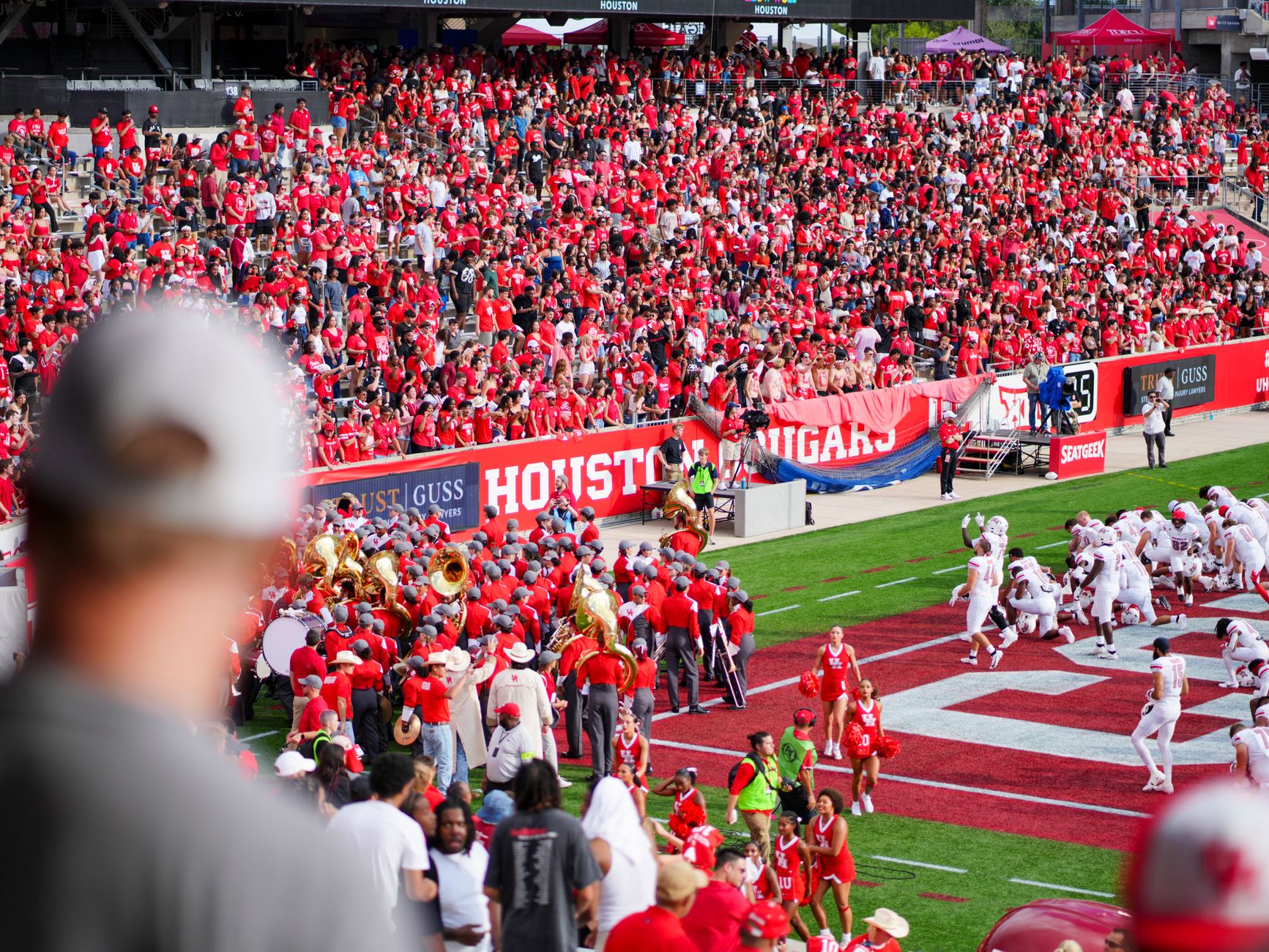
Photo by Photo Eddie O. on Pexels
Want a cleaner way to compare sports information before making a decision? Tactical Review can help you build a more disciplined research habit.
Is College Football Really Just About the Rankings?
College football is not just a ranking contest; schedule strength, roster continuity, efficiency, injuries, and conference context can matter more than a team’s position in the AP Poll or Coaches Poll. A top-five team facing a difficult road schedule may carry more uncertainty than a lower-ranked team dominating weak opponents. The useful question is not “Who is ranked higher?” but “What has the market already priced in?”
The 2026 season illustrates why this matters. ESPN’s schedule framework separates the ACC, American, Big 12, Big Ten, Conference USA, FBS Independents, MAC, Mountain West, Pac-12, SEC, Sun Belt, and FCS competitions. Those labels are not decorative website furniture; they define different travel demands, opponent profiles, championship paths, and levels of weekly depth. A bettor who compares only raw win-loss records can miss that a 9–2 record built against elite opponents may be more informative than a 10–1 record assembled against a softer slate.
The NCAA’s official football coverage includes scores, statistics, FBS rankings, championship history, and news, making college football statistics guide a useful starting point. However, even official numbers need context. Success rate, yards per play, explosive-play rate, turnover margin, red-zone efficiency, and opponent-adjusted performance are more revealing when read together. Turnovers are especially dangerous as a predictive shortcut: they influence results heavily, but fumble recoveries and interception rates can swing back toward normal.
“College football” refers to the college version of American or Canadian gridiron football, as described by Wikipedia’s college football overview.
My slightly paranoid rule is simple: if one team’s case depends entirely on a ranking, I stop and look for the trapdoor. There is usually one. Sometimes it is a backup quarterback; sometimes it is a defensive line that has quietly lost three starters; occasionally it is just me trying to justify a Saturday afternoon opinion with the confidence of a hedge-fund manager who owns one calculator.
How Does College Football Handle the 2026 Schedule?
The 2026 college football schedule uses weekly conference and national listings, beginning around August 22 and extending through bowl and College Football Playoff dates in January 2027. ESPN’s schedule page identifies Week 1 as August 22–September 7, Week 2 as September 8–13, and the regular season through Week 15, while NCAA coverage identifies January 25, 2027, as the CFP National Championship date at Allegiant Stadium.
The schedule is best understood in layers:
- Regular season: Teams play conference and nonconference games across Weeks 1 through 15.
- Conference races: Division structures, title-game formats, and tiebreakers determine postseason positioning.
- Bowl season: Bowl games follow the regular season and provide additional postseason matchups.
- College Football Playoff: Selected teams advance through CFP contests toward the championship in Las Vegas.
The opening weekend already provides an unusual travel and preparation angle. North Carolina is scheduled to play TCU at Aviva Stadium in Dublin, Ireland, while San José State visits USC at the Los Angeles Memorial Coliseum. NC State travels to Virginia, and Jacksonville State visits North Dakota State. These games carry different levels of familiarity, travel stress, stadium environment, and public attention, so comparing them as if they were interchangeable is a very bad spreadsheet.
For example, the listed market numbers for those matchups include TCU -6.5 with a 49.5 total against North Carolina, USC -35.5 with a 57.5 total against San José State, Virginia -5.5 with a 54.5 total against NC State, and a Jacksonville State–North Dakota State line that may change as books update their boards. These are snapshots, not promises. Lines move because of injuries, weather, betting volume, and information arriving late, and the number you receive may be materially worse than the opener.
2026 college football schedule breakdown
A practical information-gain point that many basic schedule pages skip is time-zone management. A Dublin kickoff can affect preparation routines and broadcast timing, while an early local start may produce a different player workload than a night game in Los Angeles. Before evaluating a total, check kickoff time, venue, surface, weather, travel route, and whether either staff has historically altered tempo after long preparation windows. The glamorous part is the matchup; the boring details often pay the bills.
Want to review the schedule with a risk-first framework?
What About FCS Teams, Bowl Games, and Other Edge Cases?
FCS teams, independent programs, bowl games, and international fixtures complicate college football analysis because roster depth, opponent quality, travel, and postseason motivation vary sharply. A matchup between an FBS favorite and an FCS opponent may produce a large point spread, but the favorite’s incentives can change after halftime, making margin-based predictions less comfortable than win predictions.
The FBS and FCS are separate NCAA football subdivisions with different competitive structures and scholarship environments. Conference names also deserve attention: the Big Ten and SEC typically generate intense national scrutiny, while the Big 12, ACC, American, Mountain West, Sun Belt, MAC, Conference USA, and Pac-12 each create distinct scheduling ecosystems. FBS Independents add another wrinkle because they do not follow a standard conference schedule.
Bowl games are especially easy to misread. A program may lose a coach, see players enter the transfer portal, or rest a key starter before kickoff. Conversely, a team that missed its conference title goal may arrive highly motivated, while another treats the bowl as an administrative obligation with nicer weather. The betting market often reacts to public narratives, but not always quickly enough to reflect a late opt-out. That is why transfer portal and player availability guide should sit beside the schedule, not in a separate browser tab you forget exists.
The international game in Dublin is another edge case. Aviva Stadium is a rugby venue with a major-event atmosphere, not a routine campus environment. North Carolina and TCU must manage travel, media duties, unfamiliar logistics, and a different crowd mix. None of those factors automatically determines the winner, but each increases uncertainty. My approach is to reduce stake size when the number of unknowns rises. This is not cowardice; it is portfolio management wearing a foam finger.
The NCAA remains the primary authority for official college athletics information, and its FBS football page provides news, scores, rankings, and championship material. Its coverage of the 2026 season also highlights the national title pathway and major player storylines. Treat those sources as verification points, while using independent analysis to test assumptions rather than simply repeating headlines.

Photo by Kampus Production on Pexels
Where Does College Football Analysis Fail?
College football analysis fails when it confuses descriptive statistics with reliable forecasts, ignores roster changes, or treats betting odds as objective truth. Common failures include overvaluing last season’s record, using national averages without opponent adjustment, overlooking quarterback availability, and assuming a high total guarantees a fast, entertaining game.
Here are the errors I track most aggressively:
- Ranking anchoring: A team’s number beside its name becomes more influential than current performance.
- Turnover worship: A positive turnover margin may reflect skill, luck, or both.
- Small-sample panic: One explosive game can distort early-season averages.
- Name-brand pricing: USC, Notre Dame, Alabama, Ohio State, Oregon, and Michigan attract public money whether or not the current matchup supports it.
- Injury blindness: A backup offensive tackle can matter more than a famous skill-position player because protection changes the entire playbook.
- Schedule neglect: A record means less without opponent quality and venue context.
A second information-gain point is operational: compare the opening line, current line, and closing line separately. If TCU opens -4.5 and closes -6.5, that movement may indicate respected money, injury news, or a broader market adjustment, but it does not prove the favorite will cover. Record the number you considered, the number you received, and the final result. After 30 or 50 tracked decisions, you can evaluate whether your process found value or merely enjoyed a lucky heater. My own imaginary investment committee remains deeply concerned about my “gut feel” department.
For totals, split the matchup into pace and efficiency. A fast offense can still produce a low total if it stalls in the red zone, while a slower team may score efficiently through explosive passes. Weather, wind, field conditions, and officiating tendencies can matter, but they should adjust a baseline rather than replace it. college football totals and spread guide can help organize that comparison.
The NCAA’s statistical and historical resources offer useful foundations, but no official database can tell you whether a coach will call conservatively with a lead or whether a young quarterback will respond after an early interception. That uncertainty is precisely why bankroll controls matter. Set a fixed percentage, avoid chasing losses, and treat every wager as a cost-bearing decision rather than a referendum on your intelligence.
Interested in comparing matchups without letting hype control the calculation?
Should You Try College Football Analysis Today?
You should try college football analysis today if you enjoy researching schedules, tactics, roster news, and probability, but you should not begin with a large stake or assume every televised game offers an edge. Start with one conference, track 10–20 games without betting, and compare your projected line with the market before judging whether your method works.
A sensible first-to-last workflow looks like this:
- First, verify the game: Confirm the date, venue, kickoff time, broadcaster, and current injury information through ESPN, NCAA, and team sources.
- Then, build a baseline: Compare opponent-adjusted efficiency, pace, explosive plays, red-zone results, sack rates, and special teams.
- Next, inspect context: Add travel, weather, surface, coaching changes, transfer-portal movement, and likely motivation.
- Finally, compare price: Decide whether the available spread, moneyline, or total is better than your estimated probability.
- Afterward, review: Record your expected edge, actual price, result, and closing-line movement.
This process also helps fans who are following the 2026 College Football Playoff without betting. You can evaluate whether a contender is genuinely complete or simply surviving close games. Watch the offensive line, defensive success rate, quarterback decision-making, and depth at linebacker and defensive back. The playoff is not won by branding, despite what the television graphics department may passionately believe.
Tactical Review focuses on FIFA World Cup analysis, match predictions, team tactics, player statistics, and 2026 tournament coverage, so its perspective is naturally broader than an NCAA-only outlet. Still, the same analytical discipline transfers well: distinguish information from narrative, identify price before preference, and protect your downside. College football changes quickly, particularly with transfer movement and conference restructuring, so dated analysis can become obsolete faster than a confident message posted after one touchdown.

Photo by football wife on Pexels
For more structured sports research, you can explore the site’s tactical analysis and prediction methods before building your own tracking sheet. The most useful result is not a lucky Saturday. It is a repeatable process that tells you when to participate, when to wait, and when the safest position is no position at all.
Ready to turn scattered college football opinions into a measured routine?
Key Takeaways for the 2026 Season
The 2026 college football season combines a broad FBS schedule, major conference races, international games, bowl contests, and a College Football Playoff ending at Allegiant Stadium on January 25, 2027. The best analysis connects schedule strength, roster availability, coaching decisions, efficiency data, and market price instead of relying on rankings alone.
Keep these points nearby:
- ESPN’s schedule covers Weeks 1–15, bowl games, and CFP fixtures.
- North Carolina–TCU in Dublin is an international Week 1 attention point.
- USC–San José State, NC State–Virginia, and Jacksonville State–North Dakota State provide contrasting matchup contexts.
- NCAA.com is a primary source for official FBS scores, rankings, statistics, and championship information.
- Opening lines and closing lines should be recorded separately.
- Transfer-portal news and late player availability can reshape a matchup.
- Responsible staking matters more than winning one argument online.
College football is wonderfully chaotic, which is also a polite way of saying the sport frequently tries to mug your assumptions in public. Follow the numbers, check the details, and keep your risk small enough that one Saturday cannot damage your month.
Learn more about disciplined sports research and tournament analysis here.
Frequently Asked Questions
Q: What is college football?
A: College football is American or Canadian gridiron football played by collegiate teams, with the NCAA governing major portions of the U.S. competition structure. The FBS is the highest-profile subdivision and includes conferences such as the SEC, Big Ten, Big 12, ACC, American, Mountain West, MAC, Sun Belt, Conference USA, and Pac-12. Its season includes regular-season games, conference races, bowls, and the College Football Playoff.
Q: When does the 2026 college football season start?
A: The 2026 college football season begins around late August, with ESPN identifying Week 1 as August 22 through September 7. The opening schedule includes North Carolina versus TCU at Aviva Stadium in Dublin and USC versus San José State in Los Angeles. Confirm kickoff times through ESPN, NCAA.com, and the relevant team because schedules and broadcast details can change.
Q: How can I analyze a college football matchup?
A: Analyze a matchup by checking the schedule, roster news, opponent-adjusted efficiency, pace, injuries, weather, coaching, and market price in that order. Compare yards per play, success rate, explosive plays, sack rates, red-zone efficiency, and turnover trends rather than relying on rankings alone. Record your projected line and the final closing line so you can judge the process over multiple games.
Q: What is the difference between FBS and FCS college football?
A: FBS and FCS are different NCAA football subdivisions, with FBS generally representing the top level of major-college competition and FCS using a separate championship structure. FBS teams often attract national television coverage and compete for CFP access, while FCS teams may appear in cross-subdivision games against FBS opponents. Differences in roster depth, scholarships, scheduling, and postseason pathways make direct comparisons difficult.
Q: Is betting on college football worth it?
A: College football betting is only worth considering if you treat it as high-risk entertainment and maintain strict bankroll limits. Lines such as TCU -6.5 against North Carolina or USC -35.5 against San José State are market prices, not guaranteed outcomes. Use a fixed stake, avoid chasing losses, compare available prices, and never risk money needed for rent, bills, tuition, or essentials.
Q: Why can a college football prediction fail?
A: A college football prediction can fail because of injuries, turnovers, weather, coaching choices, poor matchup assumptions, or unexpected player availability. Transfer-portal decisions and late opt-outs can materially alter bowl and playoff games, while one defensive touchdown can distort a total or spread result. Review the original assumptions and closing-line movement instead of declaring the entire method useless after one loss.
Q: Where can I find official college football scores and rankings?
A: NCAA.com provides official FBS news, scores, rankings, statistics, championship history, and College Football Playoff information, while ESPN offers detailed schedules, matchups, television listings, tickets, locations, weather, and odds snapshots. Team athletic departments are useful for official injury and roster updates. Cross-check at least two sources before acting because broadcasts, lines, and player statuses can change quickly.
Thank you for reading.
Tactical Review · Curated Silence · 2026